How does retatrutide work beyond easing hunger?
Food may stop calling for your attention so often. Retatrutide also changes how your body uses stored fuel. Researchers think both changes help explain weight loss. You can't judge every body change from hunger alone.
What is the short answer when your hunger eases?
Food may draw your attention less when hunger eases. Retatrutide acts like GLP-1, a hormone from your gut. The drug can reduce appetite and help release insulin.
Insulin helps your body use sugar from your blood.
Another hormone from your gut, GIP, helps insulin come out. Retatrutide copies that action too. But hunger and insulin aren't the drug's only effects.
Your liver can also use more fuel stored there.
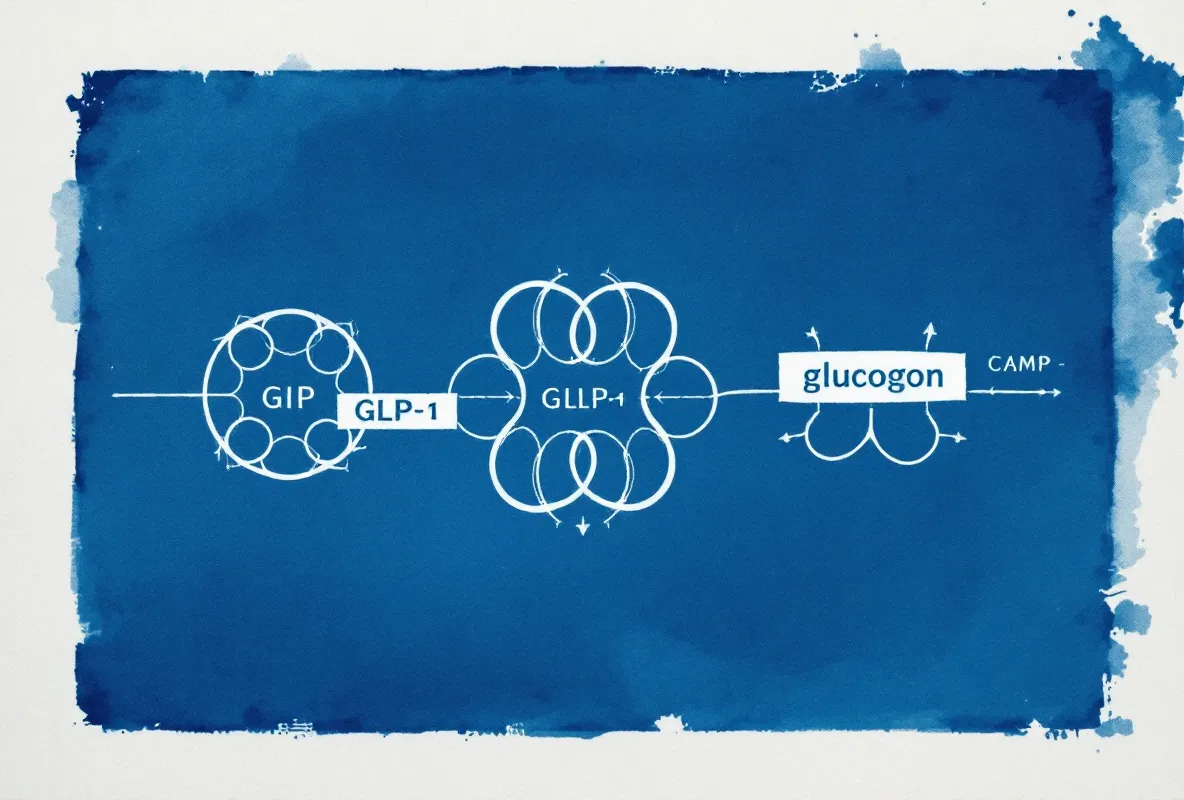
Retatrutide draws on glucagon, a hormone affecting the liver. The liver burns stored fuel; some fat tissue makes heat. Related drugs usually copy fewer of these hormone actions.
You can eat less while your body uses more fuel.
Phase 2 means testing benefits and risks in larger groups. At the largest amount, average weight fell 24% over 48 weeks. Earlier approved drugs of this kind hadn't shown such large losses.
A group's change can't promise your own change.
The drug doesn't yet have approval for patient treatment. You can't judge safety from the explanation of weight loss. Your doctor also needs to know your health and medicines.
How could your stomach, blood sugar and liver respond?
What happens after your gut releases GLP-1? The gut releases this hormone after eating. Food leaves your stomach more slowly, which can ease hunger. When blood sugar rises, retatrutide also helps release insulin.
Your appetite doesn't tell you how much insulin was released.
Insulin helps sugar move from blood into your cells. Retatrutide uses GLP-1's attachment sites on cells [6]. Related approved drugs share that hunger effect.
What does GIP add after you eat? The gut also releases GIP after meals. That hormone helps release insulin through a separate action. GIP also changes the body's storage and use of fat.
Researchers haven't settled every change in fat use.
At normal levels, GIP appears to help the body store fat. Its effects during drug treatment are more complex. You can't predict a drug's results from the natural hormone alone.
The body's whole response needs tests in people.
Researchers tested retatrutide on cells kept in a dish [3]. The tests showed attachment where GIP normally acts. Cells then passed messages inward. Those tests didn't check a patient's insulin or weight.
GLP-1 releases insulin; GIP adds to that release.
Why can glucagon raise sugar while helping burn fuel? When sugar gets too low, glucagon tells your liver to release sugar. Insulin has the opposite effect on blood sugar. Glucagon also helps your liver burn stored fat.
That added fuel use helps distinguish retatrutide from related drugs.
Your body may use more stored fuel while you eat less [1][10]. Some fat tissue makes heat as fuel is used. But a faster pulse may accompany these hormone effects.
You can't judge possible benefits without the harms.
A lab also tested glucagon's attachment sites on cells [3]. These cells were in a dish, not in patients. Researchers wanted fuel burning without pushing sugar too high. Cell tests can't prove that balance in your body.
Your sugar and current medicines still need medical checks.
Why could less food and more fuel use lower weight?
Your body takes in food and draws on stored fuel. Reduced hunger can mean less food coming in. Glucagon can increase the liver's use of stored fat. GIP affects insulin release and the use of fat.
Researchers think those actions help explain larger weight losses.
Your body's parts respond in different ways. Messages reaching your brain can reduce interest in eating. Changes in liver cells can increase fuel use.
Your appetite doesn't show every change inside your body.
Phase 2 found average weight loss near 24.2% over 48 weeks [1]. Separate GLP-1/GIP drug studies reported losses near 20%. Those drugs copy gut hormones involved in hunger and insulin.
Different people and lengths of testing make comparisons harder.
You can't choose your medicine from those separate averages. A 2024 Cell review discussed the combined hormone effects [10]. It compared the size of weight losses with surgery.
Your risks can't be judged from similar weight losses.
Glucagon also helps explain the pulse increases measured in people [1]. The hormone affects cells setting your heart's pace. Some outside users of research products describe feeling warmer.
They guess that extra fuel burning caused the warmth. Their accounts weren't tested against a comparison group. Trials haven't checked and confirmed those reports.
Feeling warm can't tell you how much fat was burned.
What can cell tests tell you about treatment?
People's weight changes prompted questions about how retatrutide works. A 2024 Cell Discovery study examined quickly frozen proteins [3]. Researchers used a powerful microscope to see where the drug attached.
You aren't reading a test of patients' hunger.
The proteins sit on the outer covering of cells. Hormones attach to these proteins to start changes. Retatrutide attached at each of the three hormone sites.
Those sites help explain which actions the drug can copy.
Researchers named one gripping part loop 1. The gripping part's shape differed among the attachment sites. Researchers think those differences may help explain the drug's actions.
You can't read your future weight loss from those shapes.
Researchers also tested cells kept in a dish. Retatrutide started changes at sites used by GIP. It also acted at sites for glucagon and GLP-1 [3]. That gut hormone is involved in hunger and insulin.
Your safety still needs findings from people.
These tests didn't measure hunger, sugar control or weight in patients. They didn't prove that stomach trouble could be avoided. How retatrutide works explains the cell findings further.
Patient studies tell you more about benefits and harms.
Why is GLP-3 a confusing name for retatrutide?
You may hear people call retatrutide GLP-3. That nickname doesn't name a hormone attachment site. The drug acts where GLP-1, GIP and glucagon attach to cells.
The name retatrutide tells you which drug is being discussed.
Both gut hormones increase insulin release following a meal. Glucagon helps your liver release sugar and use fuel. These are three different hormones with different jobs. Calling the drug a numbered GLP hides those differences.
You don't need the nicknames to follow the drug's actions.
GIP/GLP-1/glucagon names the hormones the drug copies [3][7]. That means changes in hunger, insulin, and stored fuel use.
What did Phase 2 find on scales, scans and blood tests?
A tape measure showed narrower waists while scales showed weight loss. Phase 2 followed people in a 48-week study [1]. Staff weighed patients and measured their waists.
Your scales can't tell you why weight was lost.
How much weight did each group lose? At 12 mg, average loss was 24.2%. With placebo, shots without the drug, average loss was 2.1%. At 1 mg, weight fell 8.7% on average. The 4 mg group's average loss was 17.3%. At 8 mg, average loss reached 22.8%. At 12 mg, the average was 24.2%.
Those study amounts aren't approved choices for your treatment.
What did the waist measurements show? At 12 mg, waists narrowed by about 19.4 cm. The change suggested less fat deep inside the belly. Researchers connected that change with the proposed fuel-burning effect.
A narrower waist doesn't settle your lasting health.
What changed in the liver scans? Liver fat fell 82.4% at 24 weeks [5]. Scans showed normal liver fat in 86% of the people. Researchers linked the changes with glucagon's fuel-burning action.
Your liver needs more than a short-term scan result.
A 2026 report examined blood fat changes [14]. Blood fats fell alongside proteins affecting how fat is cleared. Those protein measurements helped researchers study the drug's actions.
Lower protein levels alone don't mean better health.
Researchers linked these blood changes with glucagon. The tests don't establish lasting heart protection for you.